Solo Exhibition · 2026
INTEROCEPTIONS
Iris Projects, Abu Dhabi, UAE · Curated by Shamma Al Mheiri
6 June – 6 August 2026
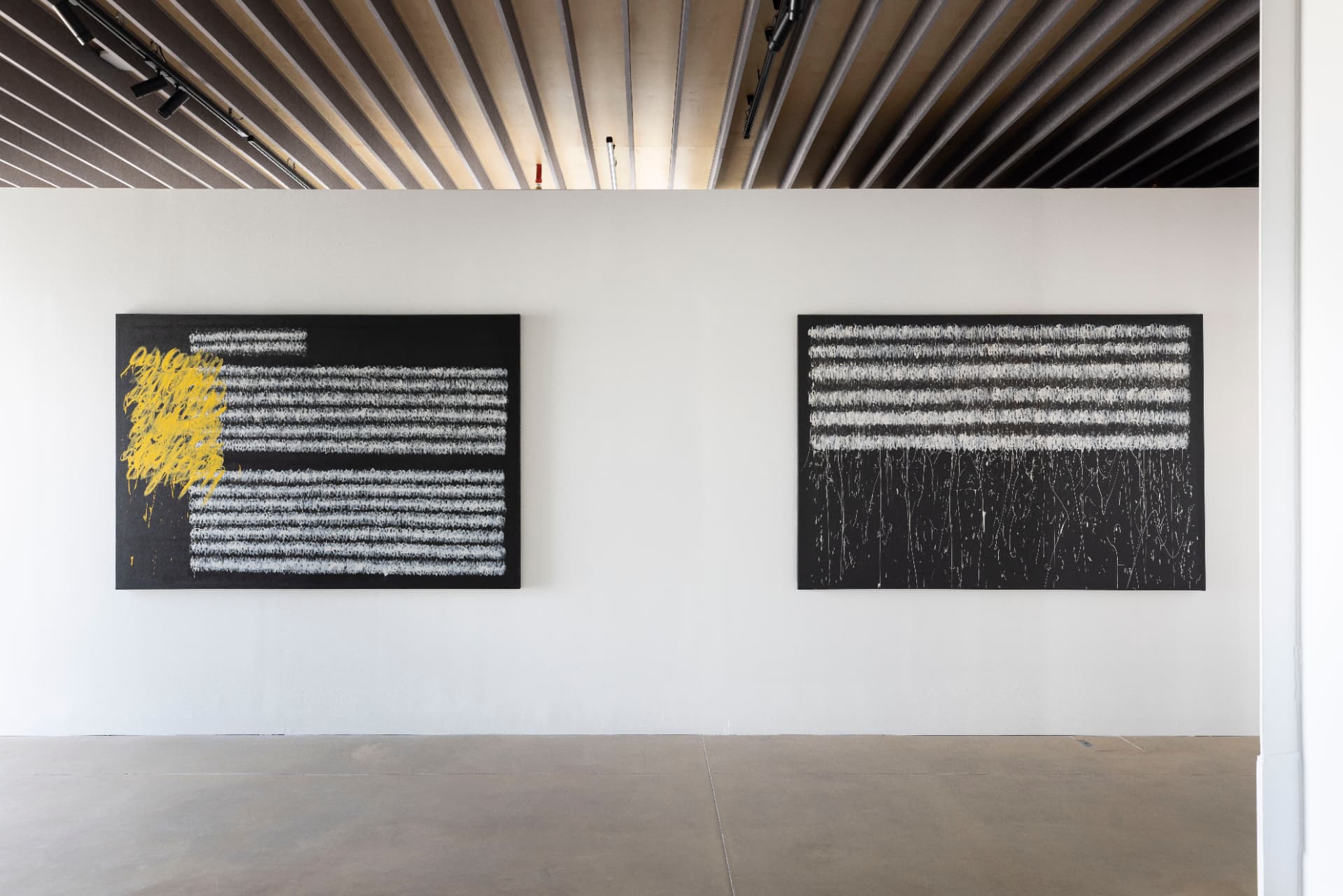
Twenty-four hours after the first missile attack on his homeland was reported, Juma Al Haj was drawn to his studio, signing the first body of work, "UAE was targeted", not knowing this would be the start of a series of works that are now markers of unprecedented times in history. What began as an immediate response to a moment of geopolitical rupture gradually evolved into a visual archive of psychological and emotional states shaped by instability, fear, and collective uncertainty. Unlike conventional representations of war, Al Haj’s works take a different angle, materializing cognitive and sensorial elements into abstractions that evoke emotions strongly attributed to them.
Central to the exhibition is the notion of interoception, the body’s ability to sense and process its internal condition. Also referred to as the "eighth sense," interoception becomes a conceptual framework through which Al Haj navigates psychological responses to turmoil. Fear, anger, and confusion were amongst only a few feelings expressed by the artist during the war on his homeland. Akin to interoception, Al Haj’s artistic practice is one that is innate and intuitive in practice. When words are not at play, he finds himself displaying emotions alternatively, consumed by the repetition and abstract variations of script.
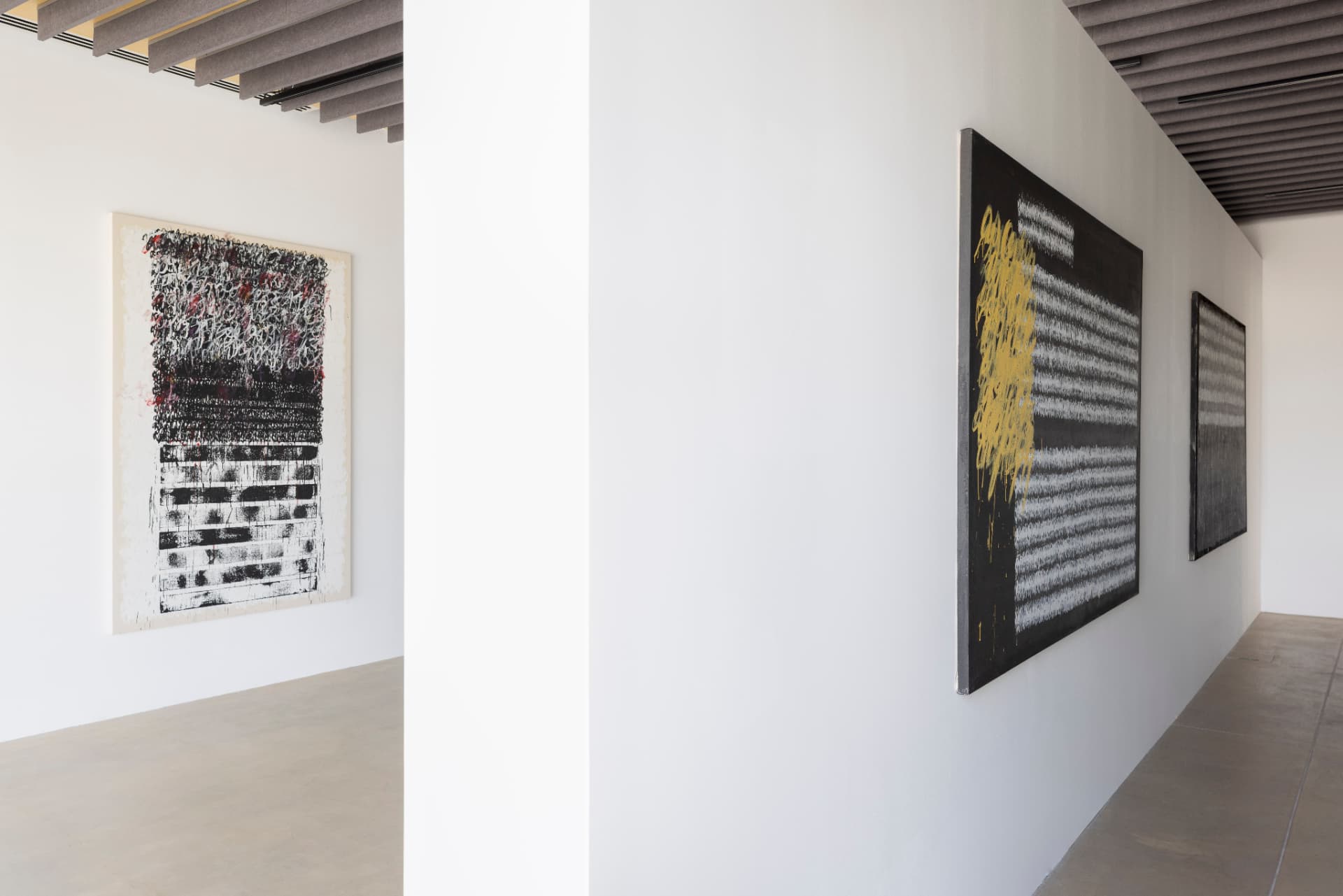
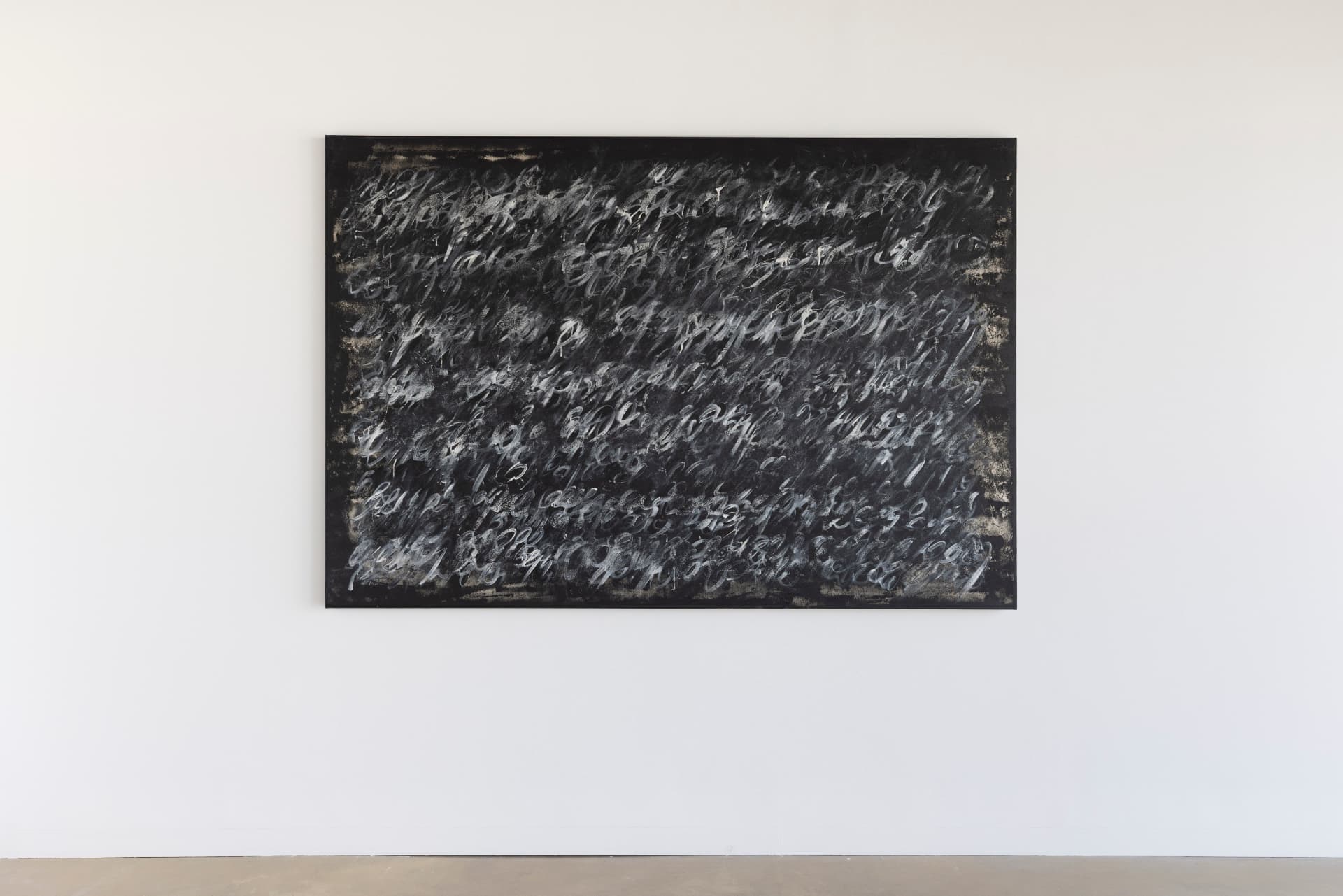
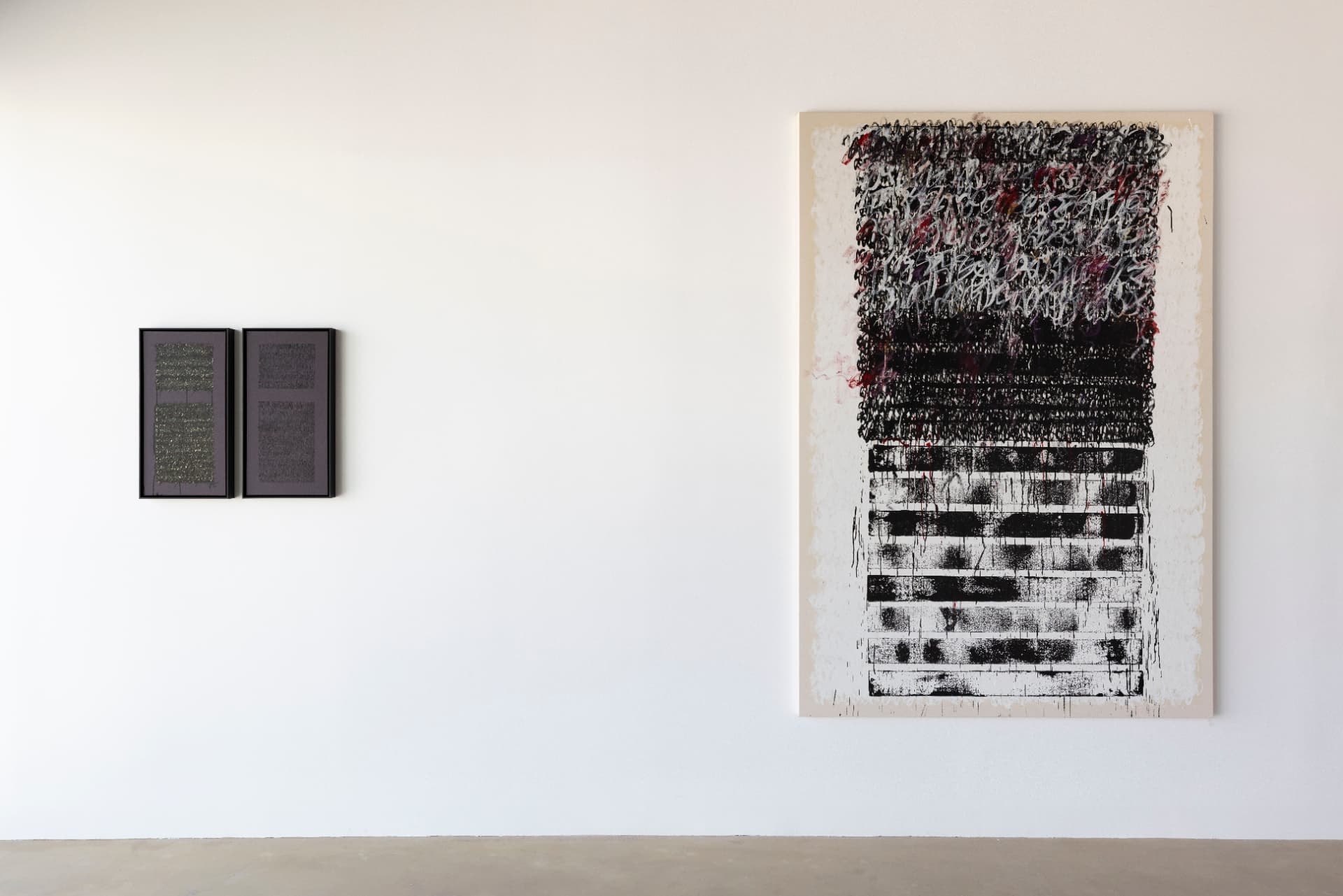
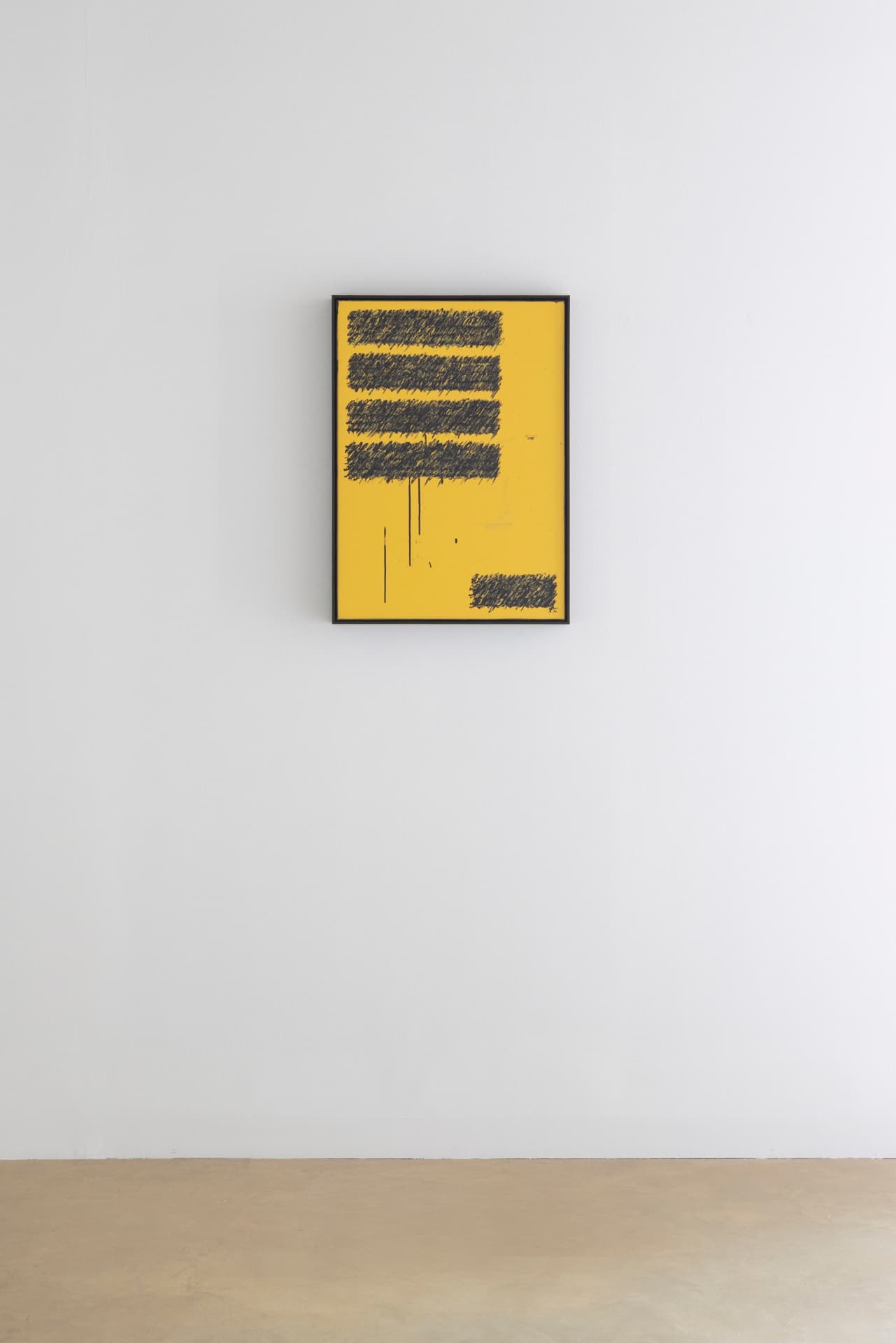
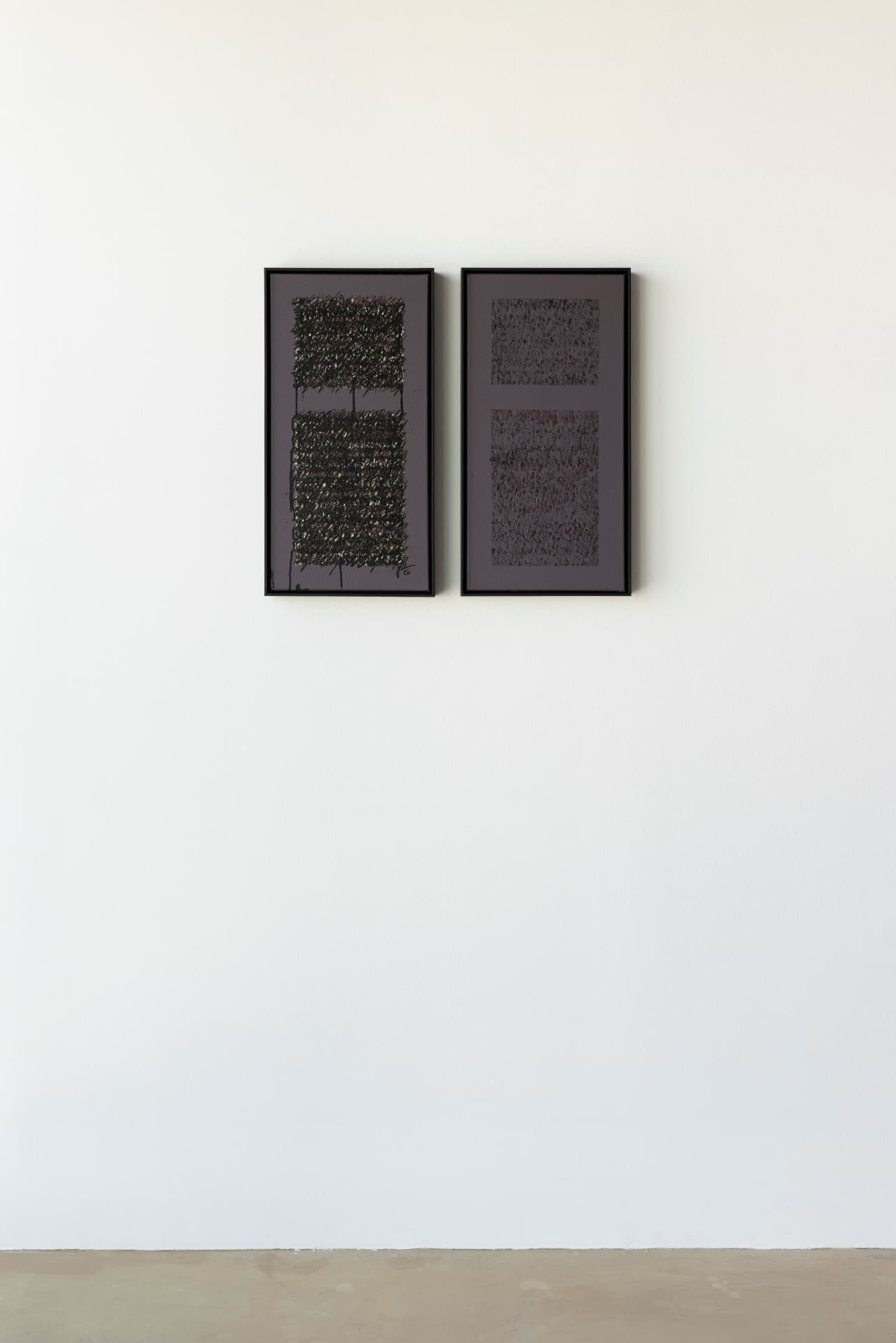
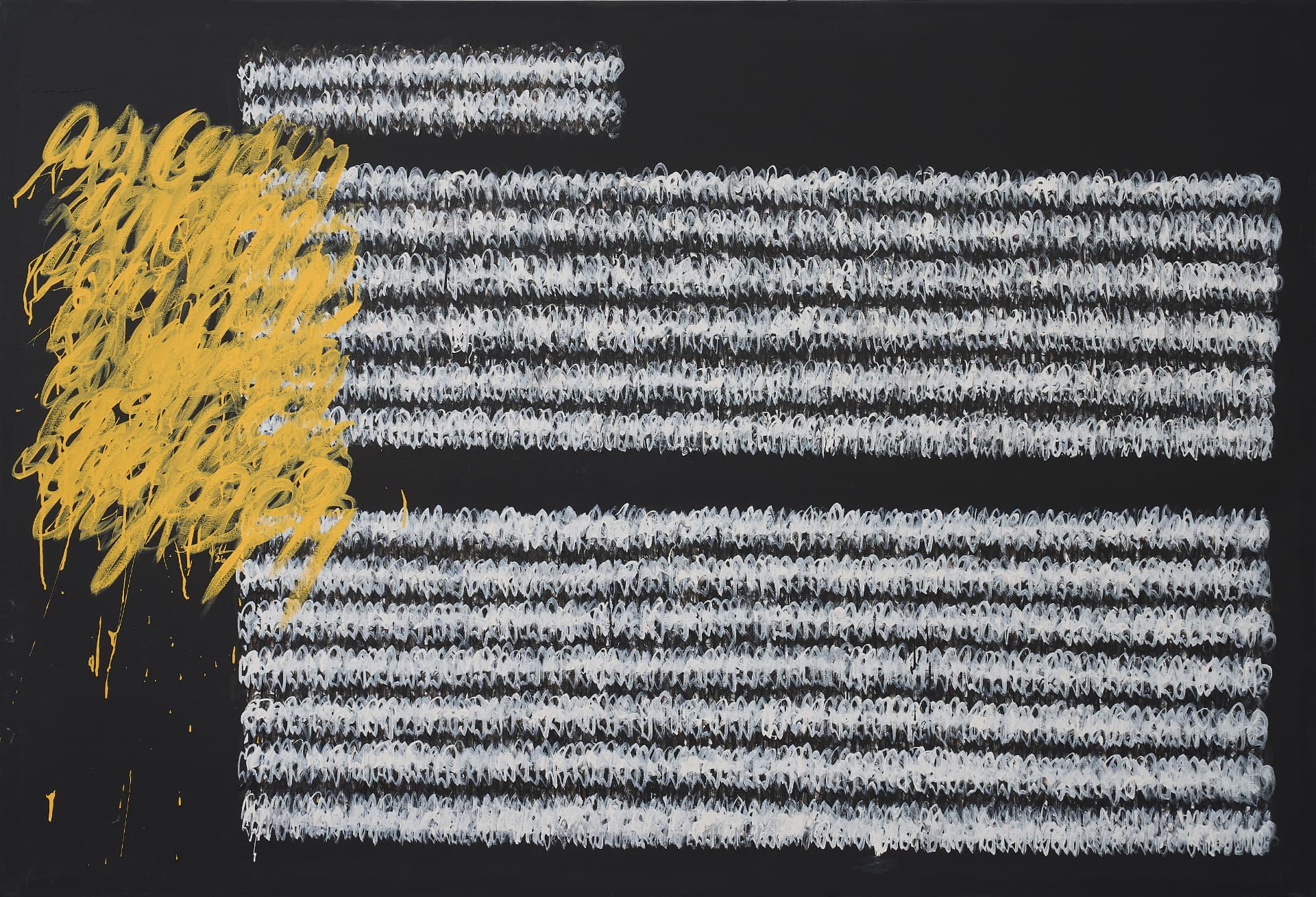
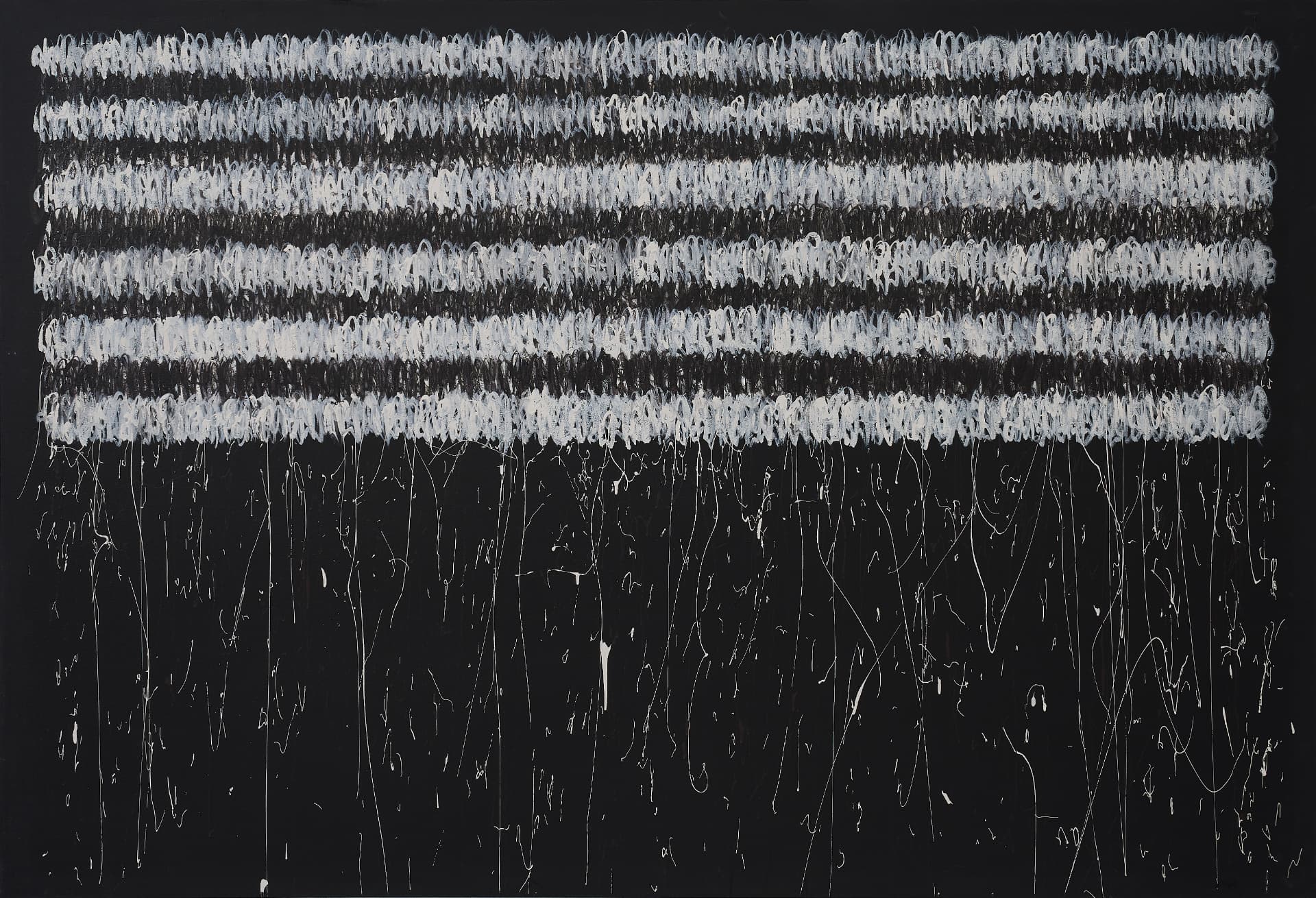
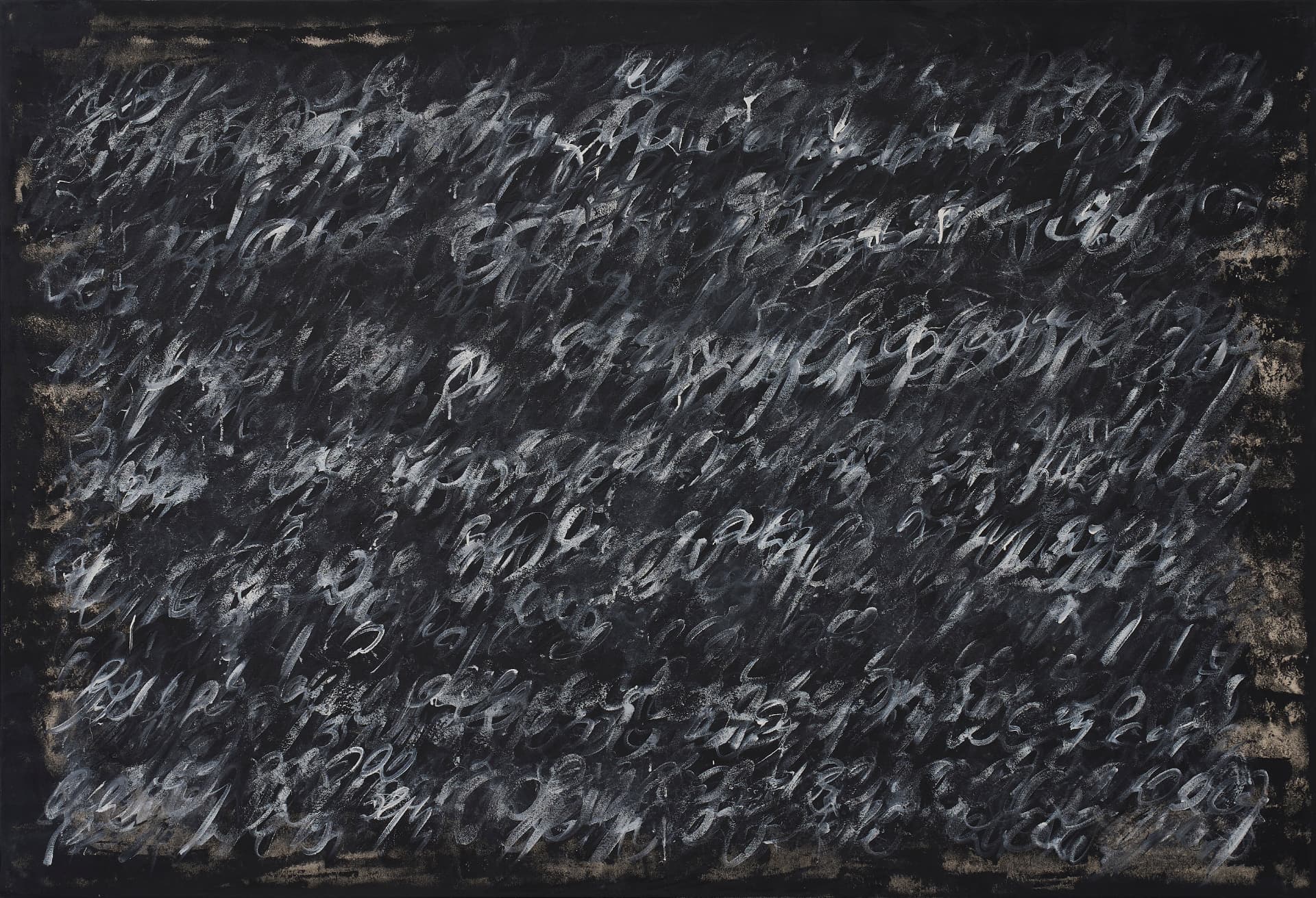
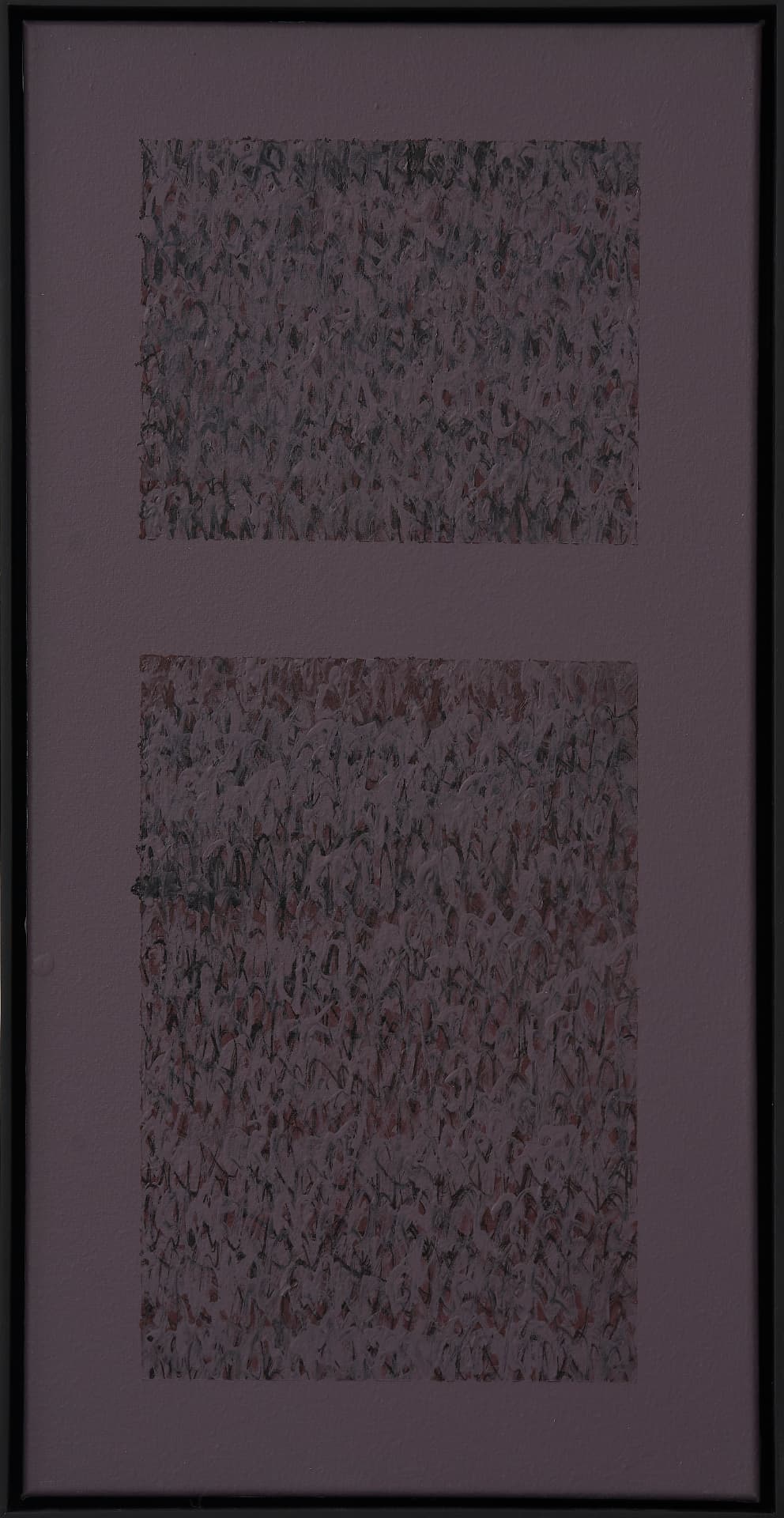
The written language is no longer functional nor legible in the traditional sense, but translated and felt through materiality. Once again, Al Haj transcends the confines of text, in an attempt to articulate the eighth sense. The medium became his vessel for the emotions triggered by a series of internal and external conflicts. It is orderly, yet chaotic in nature. It is intuitive, yet intentional and not haphazard. Colors trigger reactions, as they are processed by the artist during the interceptions heard from his studio, but also the viewer observing the works elsewhere. It is symbiotic in nature, the movement and the artist remain in tune. The harrowing ringing of the alarms, creating a symphony similar to an orchestra tuning, the call to prayer on a Ramadan night followed by loud interceptions overhead, a pattern that goes on for weeks after the first attack on the 28th of February. Al Haj’s body of works are witness to a period in time when his autonomy and sovereignty, similarly to the nation’s, was violated and tested.
The title, Interoception, is also a reference and a play on words with the term interceptions. For some, a term only fully grasped when the attacks first started. By definition, it is the act of interruption or disruption of an event from occurring or reaching its full potential. In the context of this war, the interception of drones and missiles resulted in sensations never experienced before. In the beginning, the feeling of unfamiliarity accompanied by the interceptions signaled a disruption of safety and normalcy, signaling instability. But for others and for most, upon further understanding, interceptions signaled protection, and the return of safety. The eighth sense is then processed, understood, and reflected through the creative process and visual representations for the collective to experience.
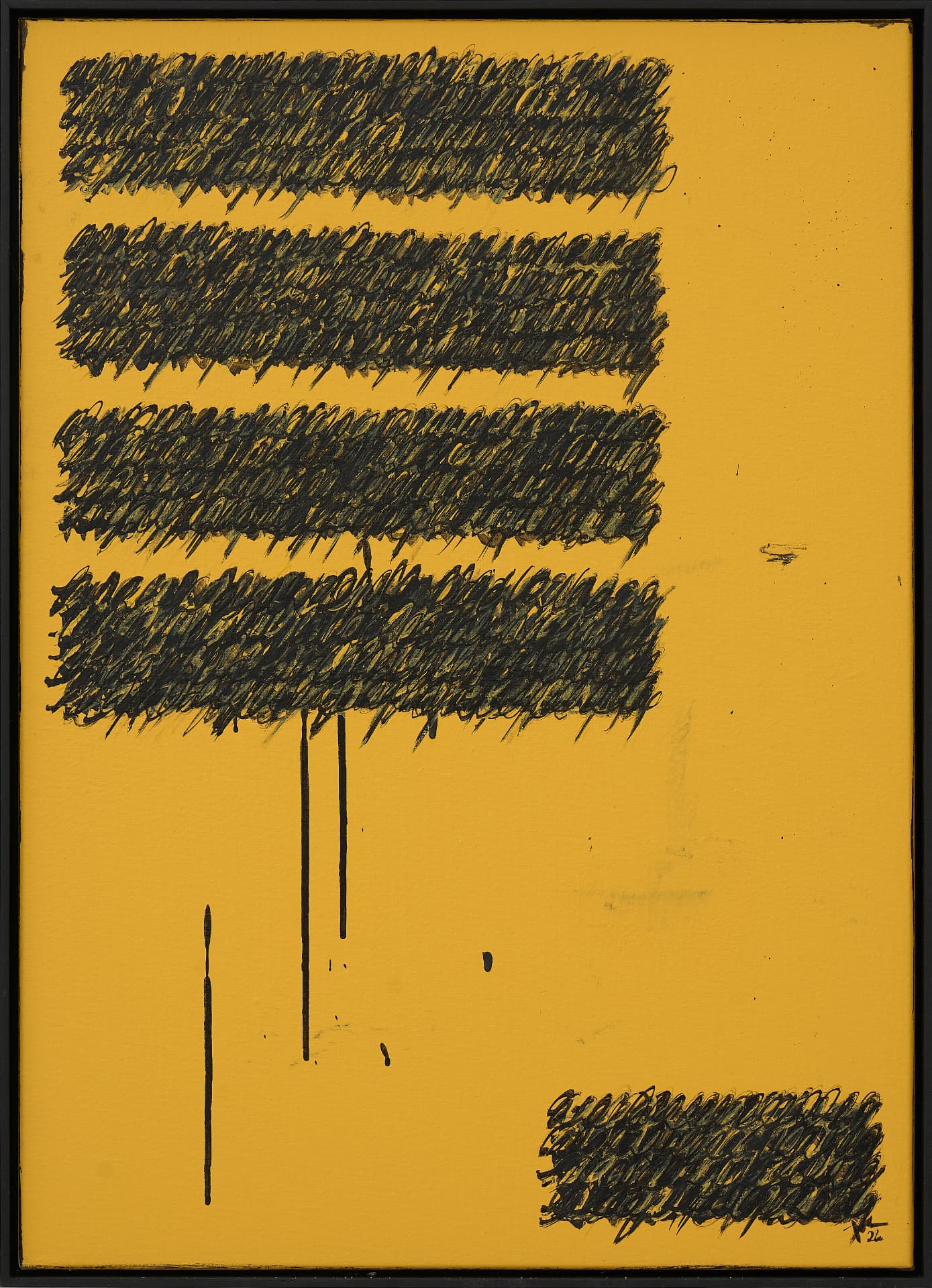
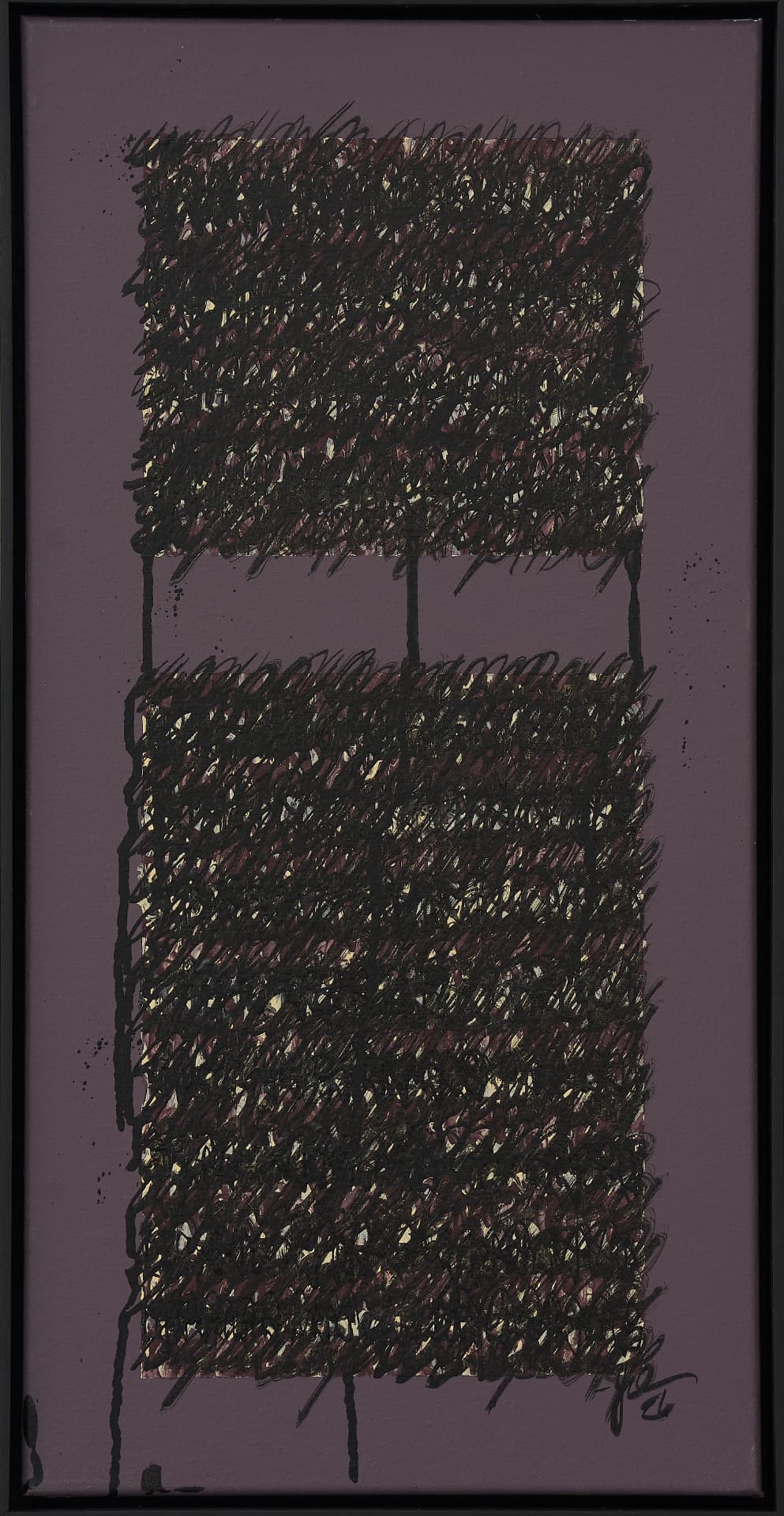
Al Haj’s artistic practice goes beyond the confines of material expression and textual experimentation, deeply rooted in sensorial experiences. When in distress, he turns to journaling, pen on paper or brush on canvas interdependently. His works are deeply personal, rooted in the cognitive process of manifesting his thoughts and feelings in a way one would through diary entries. Within the exhibition, Al Haj experiments with new techniques and methods of layering with paint. Similarly to how emotions are processed, suppressed, everchanging, and progressive, oftentimes, he layers his works to rethink colors used and shapes portrayed before presenting the final body of work. This is at the very ethos of his craft. Abstract adaptations of journal entries that are personal and temporal in nature, referencing a specific time and space.
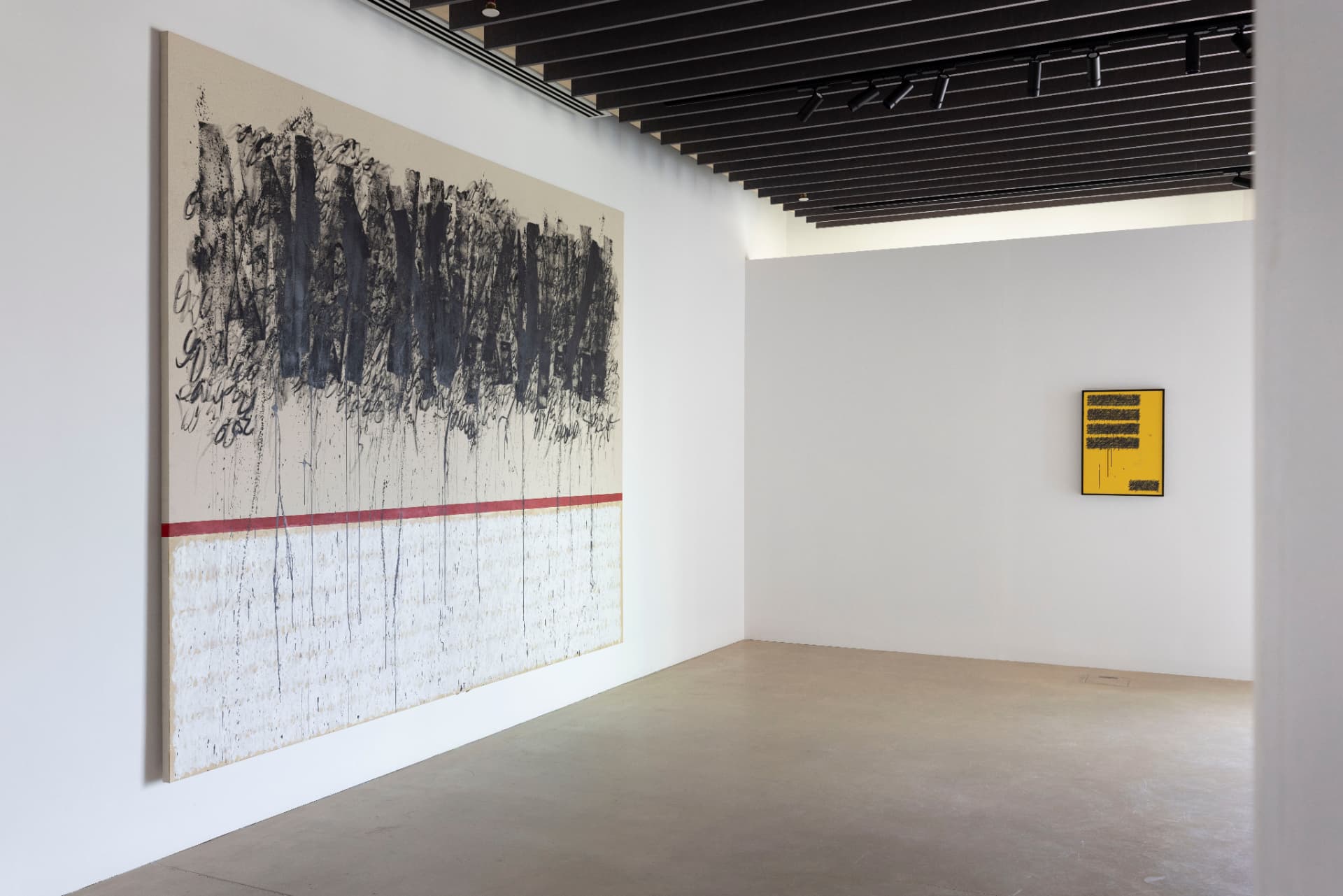
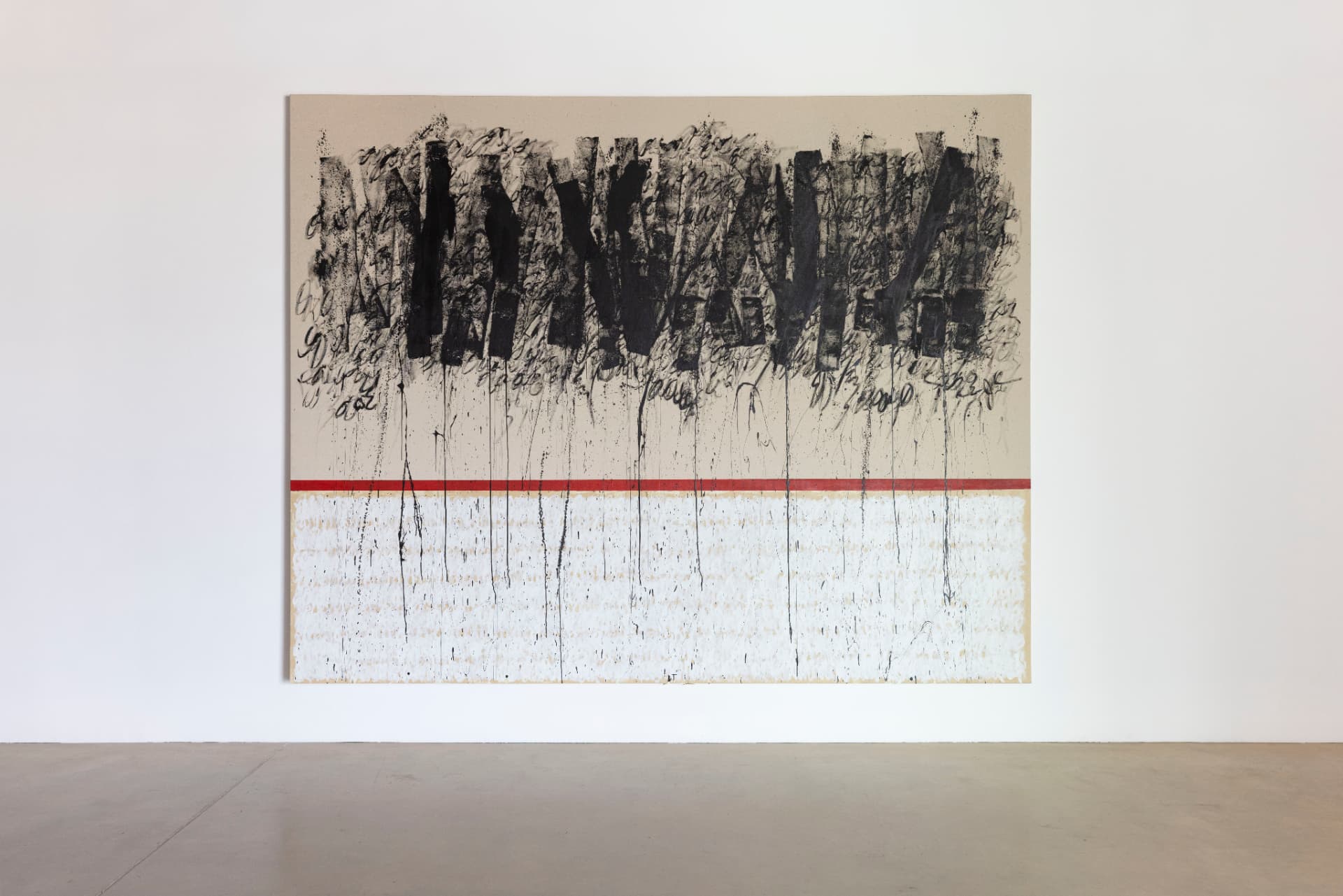
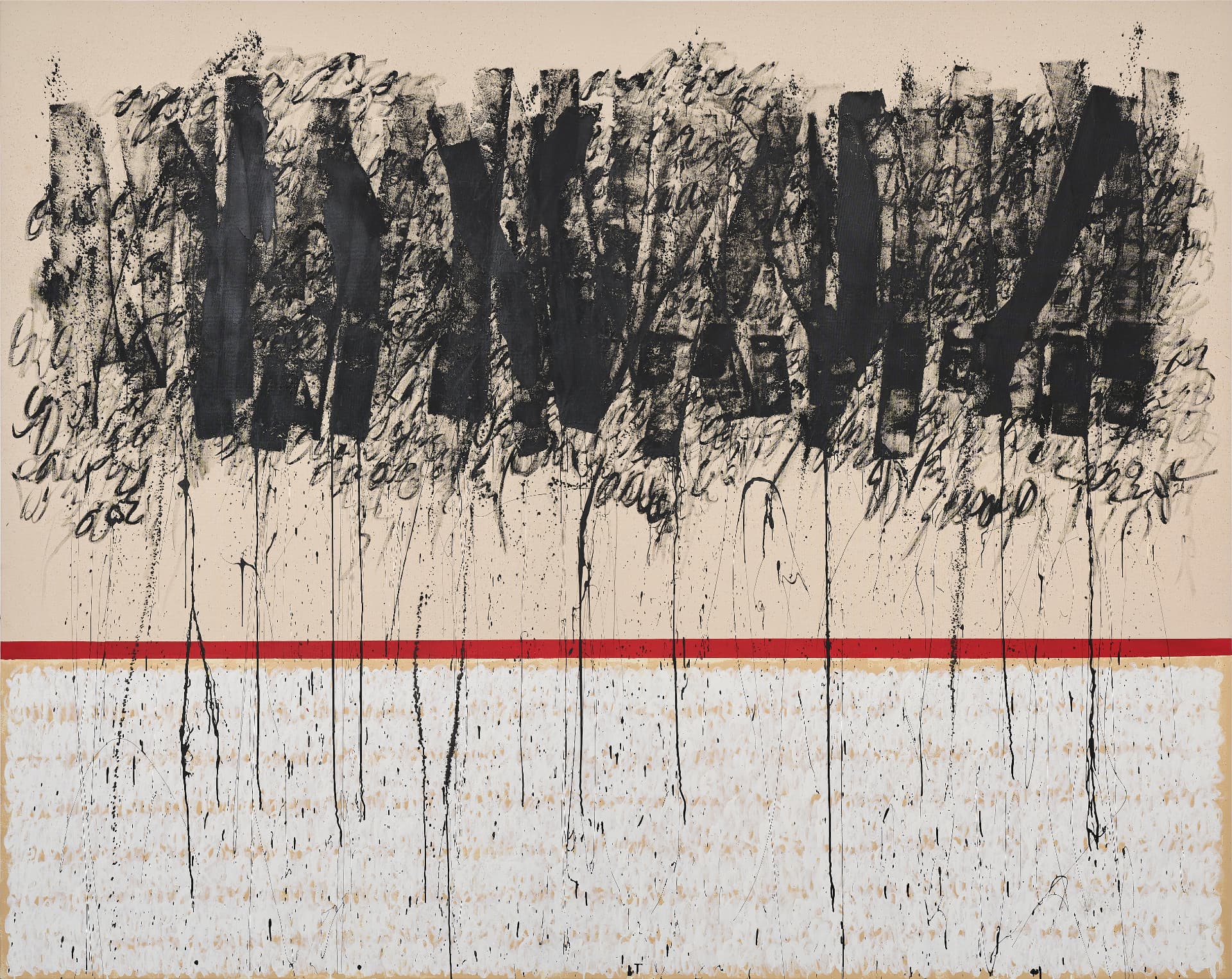
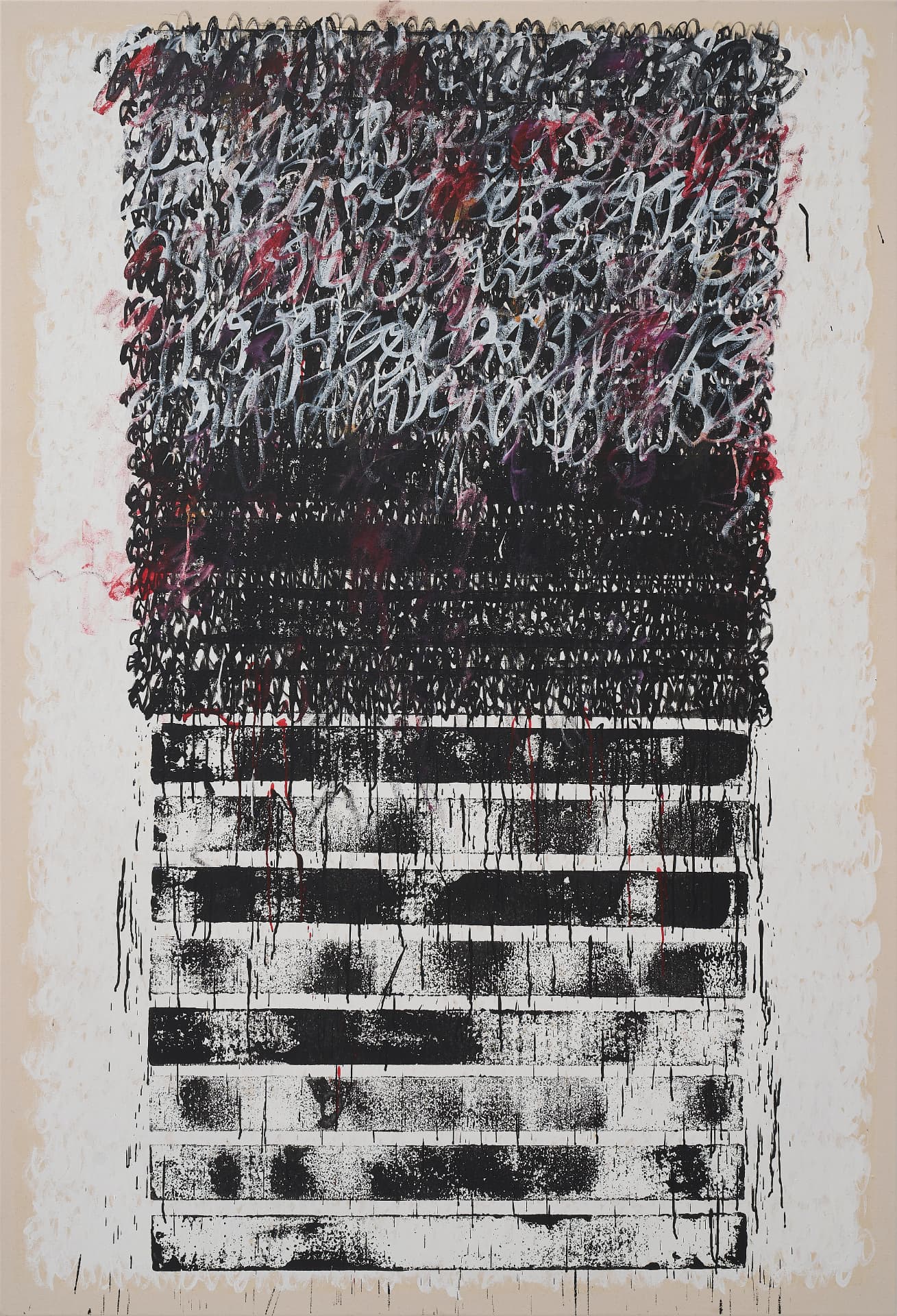
The largest work exhibited depicts a black cloud above a red line, referencing the flagrant penetration of airspace, with the sky becoming the warzone. It is also reflective of the cognitive processing of war, as the mind remains in a constant state of disruption, an internalization of external threats. The canvas is painted in layers, with disordered strokes and illegible writings. For this specific work, he uses toy guns, filled with black ink, sprayed onto the canvas, resulting in disarray; a reflection of the artist’s distress. While the crimson line across the canvas is a figurative reference to the boundaries of national and personal security and integrity, if crossed, unforgotten, a statement in itself.
Upon completion, Al Haj signs the unseen parts of the canvas with the time he begins and finishes it, with notes or quotes that reflect emotions that struck him throughout the process. In one of his works, he signs the back with a quote from a poem chanted during his time in military service, Al Azi, eulogizing the country and recited in pride, in this case addressed to the enemy:
يا خصيم الدار شوف وموت غصه
أمهات العنق واللون الرمادي“O enemy of the homeland look and die of envy,
Mothers of long grey necks (referring to fighter jets)”
While Interoception remains relevant to a particular geopolitical moment, Al Haj’s works ultimately addresses broader questions surrounding embodiment, collective anxiety, memory, and the psychological conditions of living through uncertainty. The works speak not only to a regional experience, but to an increasingly global condition in which crisis is absorbed, processed, and internalized before it is articulated through visual language.
Exhibition Views
Artworks
Publication Credits
Published by Iris Projects
Designed by Saba Sayfaiee
Photography: Musthafa Aboobacker / Seeing Things; Amir / Artrevo
All photos in the catalogue are courtesy of the artist and Iris Projects.
Next show
The Return — 2023